Hip Replacement Surgery in Sydney
Patient information • Last reviewed August 2026
Hip replacement is an excellent operation for patients that experience pain, stiffness and restricted function secondary to their painful hip. Approximately 41,000 total hip replacements are performed in Australia each year. The decision to proceed with surgery is individual: X-rays are important, but the severity of symptoms, their effect on everyday life, general health and personal treatment goals all matter.
When might hip replacement be considered?
Most people are assessed for hip replacement because pain and stiffness have begun to substantially interfere with walking, sleep, work, exercise, putting on shoes and socks, or other normal activities. Osteoarthritis is the most common reason for surgery, although inflammatory arthritis, osteonecrosis, childhood hip disorders, previous injury and some fractures can also damage the joint.
Non-operative treatment may include activity modification, exercise and physiotherapy, walking aids, and pain relief or anti-inflammatory medication when medically suitable. Surgery is generally considered when non-operative measures have been exhausted.
What is a total hip replacement?
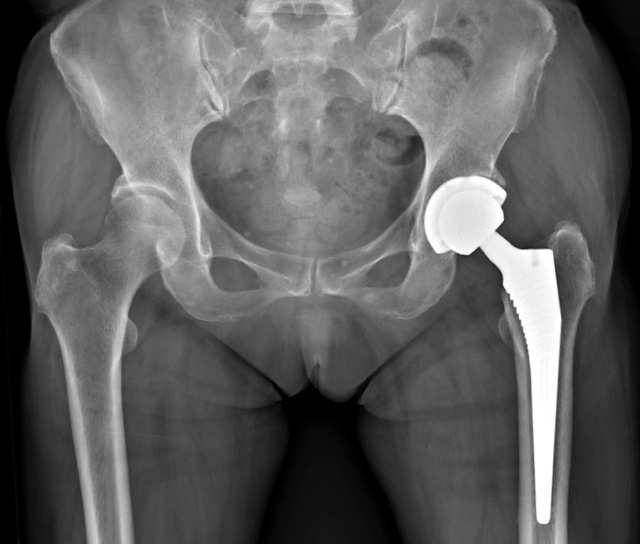
A total hip replacement replaces both sides of the damaged ball-and-socket joint. The femoral head is replaced with a ball attached to a stem in the femur (thigh bone), while the damaged socket is resurfaced with an acetabular component. A bearing surface between the components allows the new joint to move.

Avenir Complete and G7 components
Femoral stem, head, acetabular shell and polyethylene bearing used in total hip replacement.
Position and fixation
Component size, position and method of fixation are planned for the individual patient.
Components may be fixed to bone with or without bone cement. The most appropriate combination depends on factors including bone quality, anatomy, age and the reason for surgery. Modern bearing options include ceramic or metal heads articulating with a highly engineered polyethylene liner. Implant selection is tailored to the individual rather than using one solution for every patient.
Assessment and planning
Your consultation includes a discussion of symptoms and goals, examination of the hip and review of appropriate imaging. Pain around the hip can also arise from the lower back, muscles, tendons or other structures, so the aim is to confirm that the hip joint is the main source of symptoms before recommending surgery.
Pre-operative planning considers leg length, hip anatomy, component sizing and position, bone quality, and any previous surgery or deformity. Medical conditions, medications, smoking, diabetes, anaemia and other factors that can influence recovery or complications are also reviewed. Where necessary, these issues are addressed with your general practitioner, physician or other treating specialists before surgery.
Technology in hip replacement
Modern hip replacement can involve digital templating, advanced pre-operative planning and computer-assisted technology. These tools can assist the assessment of implant size, reconstruction of hip anatomy, leg length and component position.
Technology is one part of the overall surgical process. It does not replace careful patient selection, sound surgical technique, rehabilitation or realistic expectations about recovery.
What does recovery involve?
Mobilisation usually begins soon after surgery, with physiotherapy focused on safe walking, strength and everyday activities. A walking aid is commonly used at first. Pain, swelling and bruising are expected early in recovery and generally improve progressively.
Returning to driving, work and recreational activities depends on which hip has been operated on, strength and control of the leg, medication use, the physical demands of work, and individual progress. These milestones are discussed during follow-up rather than being based on a single timetable for every patient.
Risks and possible complications
All surgery has risks. Important risks of hip replacement include infection, blood clots, bleeding, dislocation, fracture, a difference in leg length, injury to nerves or blood vessels, wound problems, persistent pain, medical complications, implant wear or loosening, and the possibility of further surgery. Some complications are uncommon but potentially serious.
Before surgery, the expected benefits and relevant risks are discussed in the context of your own health and circumstances so that you can make an informed decision.
Revision hip replacement
A hip replacement may occasionally require further surgery because of problems such as infection, loosening, wear, instability, fracture or persistent symptoms. Revision hip replacement is usually more complex than a first hip replacement and may require specialised implants, additional imaging, management of bone loss and a different surgical plan.
I have a particular interest in both primary and revision hip replacement surgery.
Making a decision
The purpose of a consultation is not simply to decide whether you need an operation. It is to establish the cause of your symptoms, discuss reasonable treatment options and help you decide which approach best fits your circumstances and goals.
Consultations
I consult at Westmead Private Hospital, Lakeview Private Hospital and Rouse Hill Orthopaedics. To arrange an appointment, please contact the practice on 02 9051 2424 or email admin@mattjonesortho.com.au.
Further information
For general patient information about hip replacement, the American Academy of Orthopaedic Surgeons provides a detailed overview through OrthoInfo: Total Hip Replacement.
Important: This page provides general information and is not a substitute for individual medical advice. Treatment recommendations depend on examination, imaging, medical history and personal circumstances.